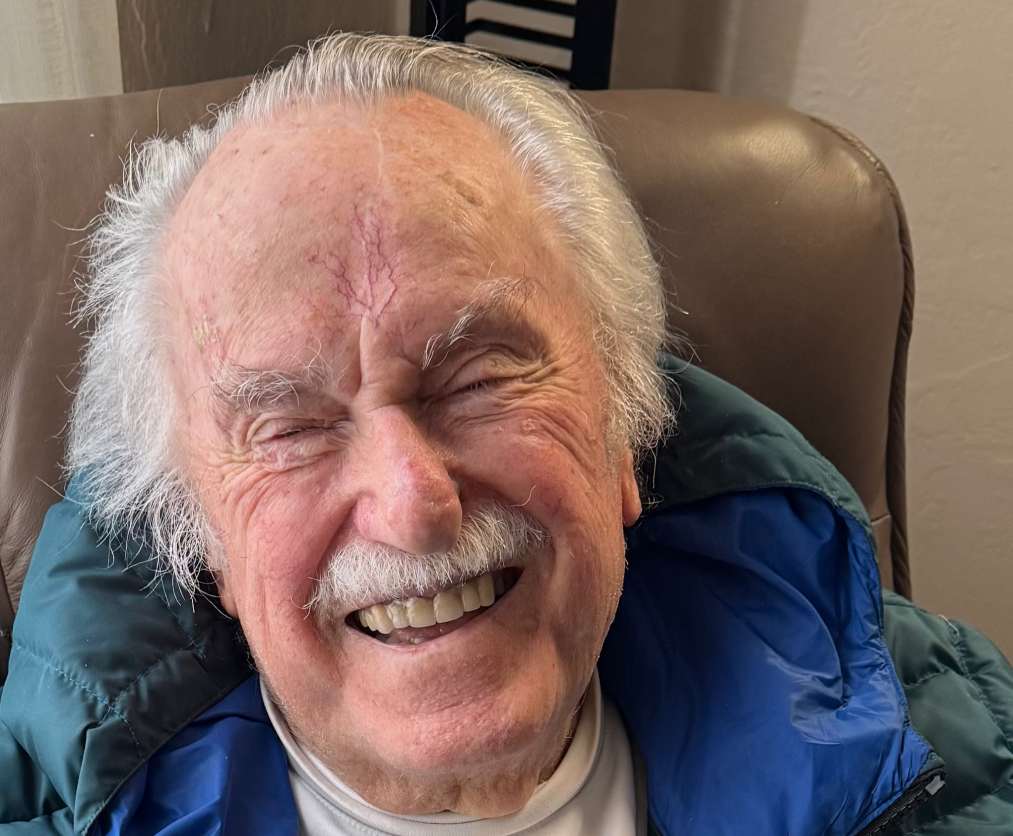
[Michael] I’m Michael Fischer, K6MLF, and Til (W6CQC). Til and I are going to tell stories about Jan Leja. Actually, his full name is Vladislav Jan Leja, Whiskey Bravo 6 Sierra Papa X-ray.
Jan was born in Warsaw in the late thirties. And then came Hitler. His father was an officer in the Polish army and was killed in the Katyn Forest, the massacre of hundreds of Polish officers. So Jan was fatherless. And I think it was 1942 or 43 that he and his mother boarded a train sponsored by the Soviets to get women and children out of Warsaw. So they got on this train, women and children only, and they followed it east into the steppes of Russia until the train ran out of coal. It was winter on the steppes of Russia. And his mother heard artillery in the distance.
And so she grabbed her baggage, grabbed Jan’s hand and said, artillery – the army’s there, let’s go. And the other women looked at her and said, it’s artillery, it’s the army, you’ll be killed. And she looked at them and said, what do you think is going to happen to us here with no food and no warmth in the winter?
So she went to the Soviet lines where the war was happening and they rescued her and sent Jan and her to Tehran. And Tehran is where Jan grew up through his teens. Then moved to England and then from there, hopped over by many different hops to California.
And years and years and years later, Til and I met him. But he had wonderful stories to tell, not only because he had so many experiences. But what a storyteller he was. He had this sense of humor leavened by a sense of humility, leavened by a sense of the outrageous nature of life. When he first came to California, exactly how he became a radio operator is lost. I don’t know.
[Til] They never found out.
[Michael] But he did become quite a well-known radio operator. He started out on Tramp steamers going around the Mediterranean and going around the Asian islands and to China and Japan in many different trades. Later on, he became the radio operator for the Matson Lines going back and forth between Hawaii and the Bay Area.
[Til] But then as radar developed and the other electronics, he was working for Raytheon. So that’s where I first met him.
[Michael] So you were the big boss and he was the contractor?
[Til] Yes, we owned the boats and he worked for Raytheon. And Raytheon had the gear on our boats. And he used to come and take care of it. And little did I know later on in life that we’d ever get back together again. And we got back together again by Michael introducing me. And then I found out he did work on my boats. And that was almost immediately.
[Michael] And they lived in West Portal.
[Til] We lived a block, two blocks away from each other.
[Michael] Do you have any stories of when he worked with Raytheon and was on your boats?
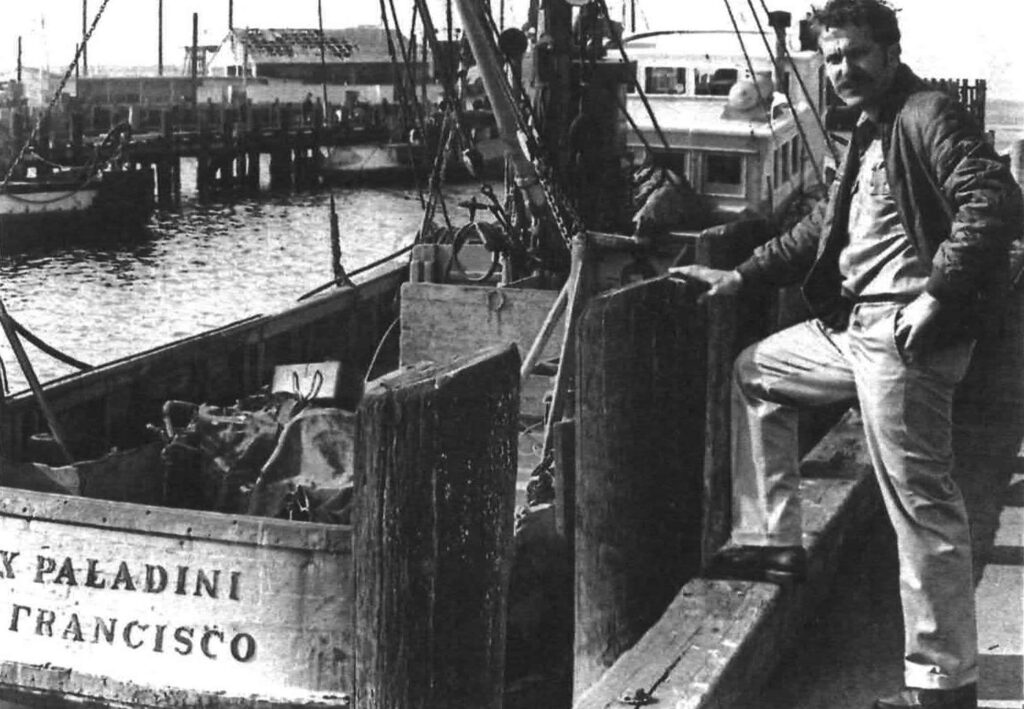
[Til] Well, the one time we took him out, yes, we had one fathometer on the boat and he hooked it up to run a coffee pot off the motor generator. The captain was making his coffee and he’d run it all the time, even when the fathometer was running. But what he failed to tell the captain, when you’re running the phenomena, turn the coffee pot off.
[Michael] He was a fabulous storyteller.
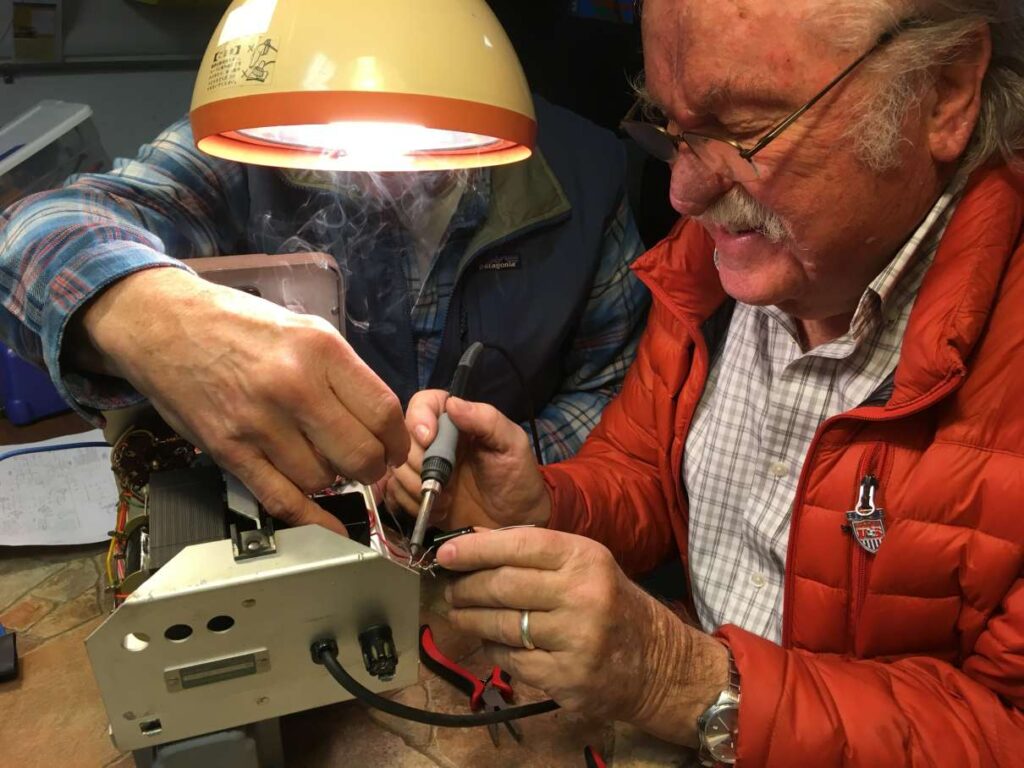
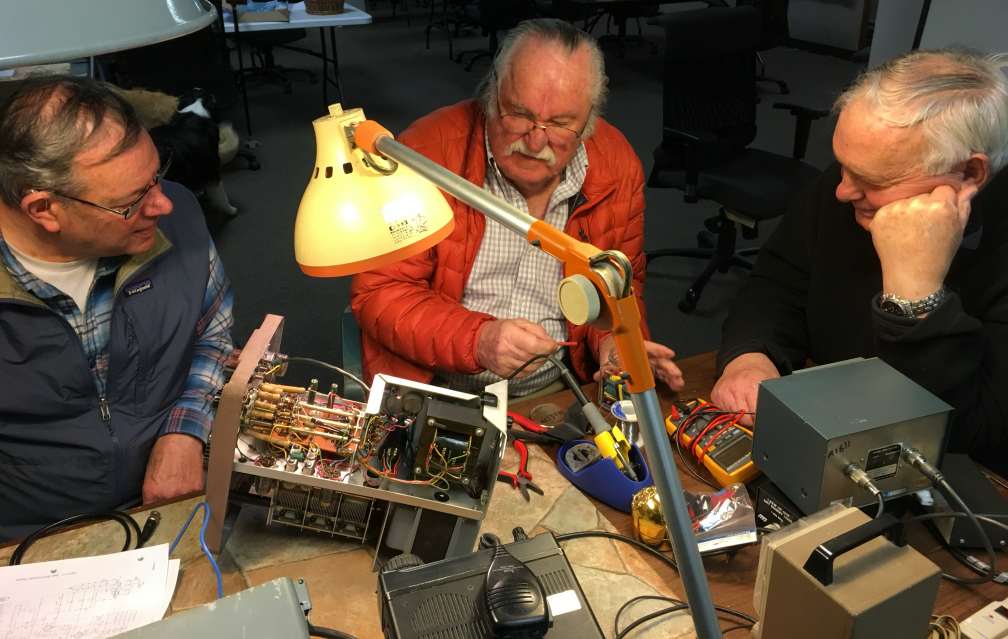
[Til] Every Sunday we’d get together and we’d go over to the clubhouse and we’d be soldering and fixing radios and things.
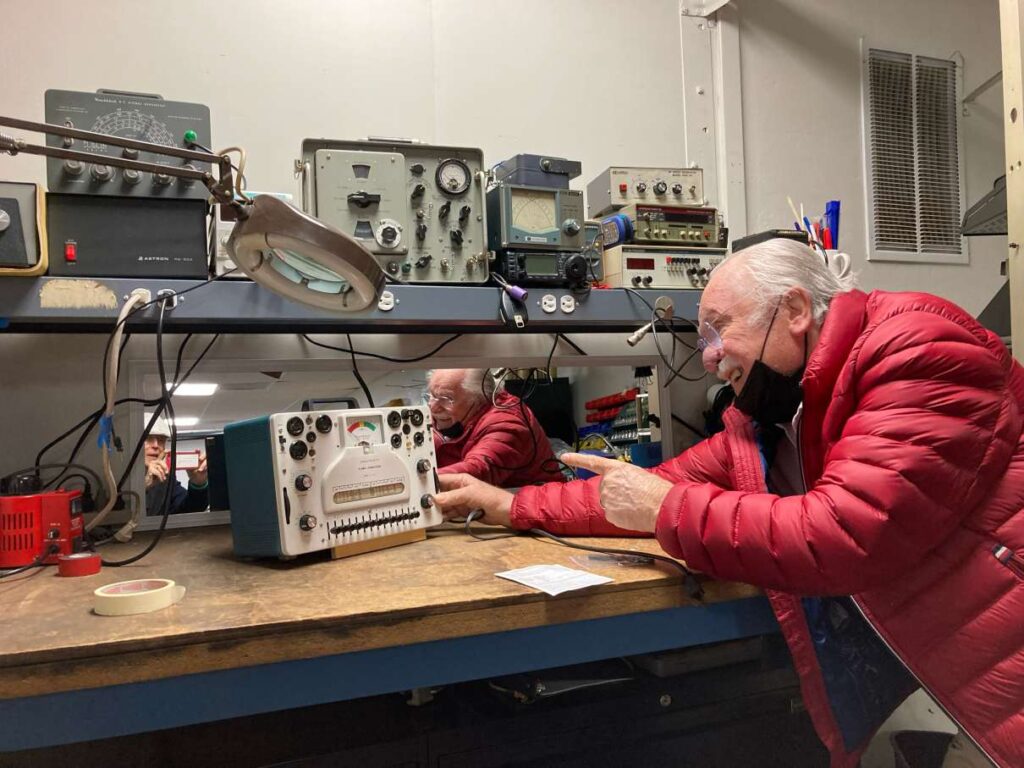
[Michael] He at first was a member of the San Francisco Radio Club and for reasons that he was never able to explain to me, he hated it. He found the people not friendly, he found that he wasn’t welcome there. And so I said, yeah, come on, come on over to Marin, we’ve got this clubhouse. We’ve got a workbench. And he became the king of the workbench.
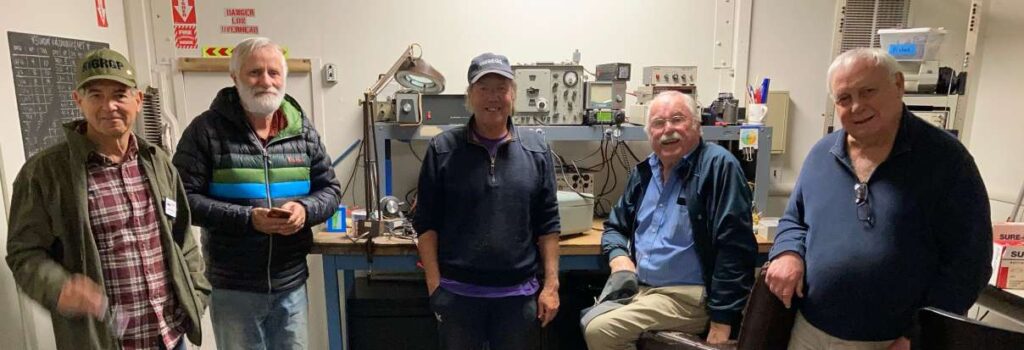
[Til] And I’d go over with him and I was learning from him what to do. I was a tube person because when I was in my heyday, it was all tubes. And now it’s those little damn things.
[Michael] Right, transistors and other diodes.
Somewhere in the Far East, Jan had a cancer growth on his nose. And he woke up from the surgery with no nose, which caused him to lose faith in all doctors. There was subsequent surgery that gave him a replica of a nose, but he went from being quite a handsome and strapping guy to a fellow with an artificial nose, or as he said, they only gave me one nostril.
So those of us who know Jan in his later life, know a guy with a kind of craggy looking face, looked like he’d been in many fights. Well it was a fight with a doctor and cancer.
[Til] And he had a heart of gold.
[Michael] Heart of gold, absolutely.
[Til] He bent over backwards to do things for you.
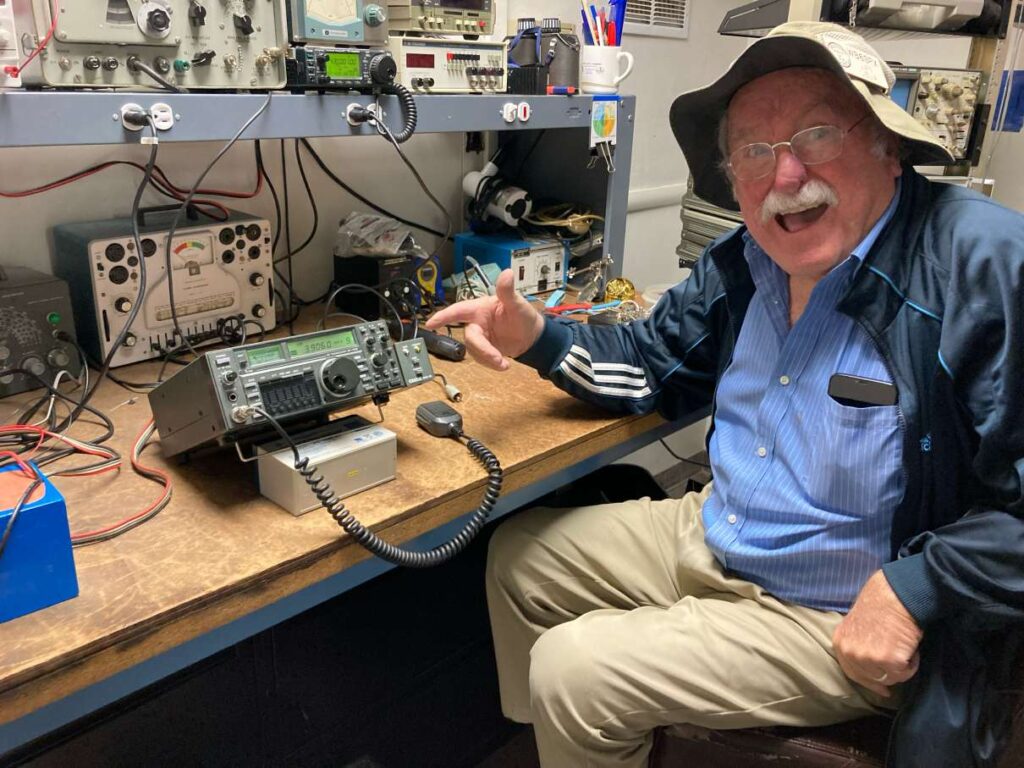
[Michael] He also, with Til and me, was a member of Mission Trail Net every night, 365 days a year.
And Jan would sign on with this wonderful European accent that he had. From San Francisco, this is Whiskey Bravo Six Sierra Papa X-Ray, wishing you ALL a VERY pleasant evening.
[Til] He’d roll that R.
[Michael] And you could just see the smiles from Idaho to Arizona of, ah, I’ve been wished a very pleasant evening. Whereas everybody else was going, you know, K6NEW, no traffic, then hung up. And in that kind of desert of quasi-friendship, in comes this enthusiastic and actual, true friendship shining over the air. So that’s the way I remember Jan, as a person who just radiates friendship.
And one of his wonderful sayings when something was working on the workbench was, “Oh, happiness!” When something wasn’t working, he might go, “Oh, happiness.” But Jan was that kind of guy.
He’s also commemorated in the Model Yacht Club. He found himself on a tramp steamer in the Philippines and a typhoon comes through. Devastation all over the place. And just across the quay from his ship was a large ocean going tugboat that had been totally ruined.
So he ran over and got the multi-spoke steering wheel from the tugboat and had it standing in the corner of his living room. When Juanita, his wife, said, Jan, couldn’t you please get rid of that damn stuff? And I said, Jan, you could donate that to the Model Yacht Club and we’d put it up and it’d be the trophy for the powerboat squadron. And sure enough, it’s there at Spreckels Lake with “donated by” and tells the name of the ship and the date and the place where the typhoon came. So he’s remembered fondly. Even though he never had anything to do with model yachts, his shipping experience gave us the gift of that tugboat wheel.
His radio station was upstairs in his house. And when he went into hospice care, he was unable to make the stairs all the way up.
[Til] He had Collins equipment. He had some good stuff.
[Michael] Til has an antenna up on the roof of this building. Jan didn’t have that big a lot. He didn’t have that big a house. So his antenna was strung up between telephone poles.
[Til] No, light poles.
[Michael] Light poles out on the street. Now, how he shinnied up those light poles to get the antenna up. He threw them up with a …
[Til] …fishing rod.
[Michael] The other thing that Til might not know about Jan, he was an avid lawn bowler. With the full kit, white shirt, white shorts, white shoes, and all the sophisticated rules.
The lawn bowling place that he used was the one at Sloat and 19th Avenue. There was also one on the south end of Golden Gate Park.
[Til] That’s the one he ended up using because of the equipment. They did something to the lawn on that one.
[Michael] But you can just imagine Jan, you know, whirling his ball looking like English Demi Royalty, which he was definitely not.
From San Francisco, this is Whiskey Bravo 6, Sierra Papa X-Ray, wishing YOU a pleasant evening.
Recorded on September 16, 2026 in San Francisco, CA